Showing posts with label The Writing Life. Show all posts

Monday, June 8, 2026

On weddings and rollercoasters

I don't usually talk about my personal life on these pages. But then I don't usually have a weekend like the one that just ended.

It all started on Friday with the wedding of our daughter Brooke to the love of her life, a wonderful young man named Ryan Winter (Brooke Winter has a nice ring to it, don't you think?). It was a gorgeous outdoor wedding in the Rim Country of Arizona, where the desert suddenly gives way to Ponderosa-covered mountains, and the weather was pretty much ideal: warm but not too warm, with an endless blue sky and not a drop of humidity in the air.

The wedding took place at Cabins on Strawberry Hill, a rustic resort with fourteen small but very cozy cabins, a wood-paneled reception hall, a large firepit, and an outdoor area with a mountain backdrop for the ceremony itself.

The wedding was officiated by a guy who works with Ryan (they're both civil engineers working on mostly highway-related projects; Brooke is an account manager at a marketing firm). Derek had gotten ordained so he could officiate another friend's wedding, but that one fell through so Brooke and Ryan are actually the first couple he ever married.

The setting for the ceremony was glorious, the bride was beautiful (of course!), and the vows were heartfelt and humorous (especially the bit about Ryan promising not to get mad when Brooke's Diamondbacks beats his beloved Padres).

Derek brought the funny as well. We all knew that Brooke and Ryan met on the dating app Hinge and that they'd bonded over a shared love of hiking, beer, and dogs. What we didn't know, at least until it was revealed by Derek, was that Ryan borrowed his roommate's dog for his profile picture because he didn't actually have one of his own.

The next hour was spent taking pictures, then we all proceeded to the reception, where a taco truck served a delicious, if messy, reception dinner, while the specialty cocktails included a Spicy Mika-Rita (named after Brooke's sassy rat terrier mix) that was a big hit. Afterwards, the DJ kept the energy level high and the crowd dancing with an eclectic mix of yacht rock (blame Brooke), alt rock, and hip hop. Everyone had a fantastic time.

The bets part: my 83-year-old widowed mother-in-law caught the bouquet.

At the same time, Tammy and I were dealing with a dying dog. After our 12-year-old lab mix Honey lost interest in food at the beginning of May, we spent the rest of the month shuttling her from vet clinic to vet clinic, trying to figure out what was causing it and what could we do about it.

The answers turned out to be: 1) a 5cm squamous cell carcinoma mass in her soft palate and throat, and 2) nothing. Chemotherapy is ineffective with this type of cancer, and while radiation would kill the tumor, it would leave a gaping hole in the roof of her mouth which would still make it difficult to eat.

We knew she would need to be put down eventually, but we didn't want to rush it just before the wedding. We were hoping to give her a few special days before she passed. So we rented an Airbnb (dogs weren't allowed to stay at the cabins) and brought her with us.

She loved it there. She was so excited to sniff the long grass around the house we'd rented, just as she used to do before she fell ill. And on Saturday, when we took her for a brief visit to the cabins, she reveled in all the attention she got from the wedding guests.

It may have been her last happy day.

Brooke and Ryan are now in Cabo San Lucas and we're back at home, making preparations for Honey's farewell. And as I look back at the weekend, I'm struck by what a rollercoaster ride of emotions it was. We're thrilled for Brooke and Ryan, that their wedding was everything they dreamed it would be and that their future is so blindingly bright.

But we're finding it difficult to separate that from the grief we feel knowing that Honey will soon no longer be with us. She's always been such a sweet, kindhearted dog, and we're going to miss her terribly.

The greatest of joys to the deepest of sorrows, all in one weekend. It's almost too much to bear. But I suppose that's life.

Friday, February 20, 2026

On writing and Alysa Liu

They say you should never stop learning. I agree wholeheartedly, especially when it comes to writing. But I never imagined that at the age of 62, I'd get my most important writing lesson from a 21-year-old figure skater.

The skater? None other than the newest Olympic gold medalist in women's figure skating, Alysa Liu. 

If you watched any of the women's figure skating this year, then Alysa's story should already already familiar to you. Originally from Oakland, California, Alysa became the youngest U.S. champion ever in 2919 at the age of 13. She placed 6th at the Beijing Olympics in 2022 and won bronze at the world championship that same year.

But she quickly burned out. Skating just wasn't fun anymore. And so, at the age of 16, she quit.

The break did her good. She went skiing. She traveled. She spent time with friends. She did all the things she hadn't had time for when skating was her entire life.

Two years later, she was ready to return to the ice. Only this time, she did it on her terms. She chose her own music. She chose her own costumes. She developed her own choreography. But more importantly, she was more relaxed about it all, following a training routine that was more collaborative with her coaches and placed her mental health first.

When she took to the ice in Milan, the difference was obvious. Technically, she was as sharp as she could be, making no mistakes during either her short or long program. She skated with ease, gliding across the ice like she was born to it. But most importantly, she skated with joy. For her entire performance, she could not stop smiling.

Even after she was done skating and was waiting to see how her two final competitors fared, she kept smiling. It didn't matter to her if she won gold. It didn't matter to her if she placed at all. She had done what she came to the Olympics to do. And that was to have fun.

She won the gold, of course. Not by training harder than anyone else. Not by wanting it more. She won it because she loved what she was doing.

I often forget that when I write. I get so wrapped up in following the rules of writing--Are the characters consistent? Does every plot point make sense? Am I avoiding cliches?--that the actual process of writing becomes a drag and I lose sight of why I started writing in the first place. To have fun.

So I've vowed that, going forward, I'm going to follow Alysa's example. I'm going to focus on my love of writing and not so much on the hard stuff. I hope it'll make my writing better. I know it'll make it more fun.

And no, there may not be any gold medals in playwriting. But there is something more important.

Joy.

Wednesday, July 17, 2024

Be careful what you wish for

I've wanted to be a full-time writer as long as I can remember.

Okay, that's an exaggeration. For most of my childhood, I wanted to be Walt Disney. Or at least an animator, which is what I thought Walt did. You know, sit around and draw cartoons of Mickey Mouse all day. It turns out he didn't, but that's another story.

For a brief period in my early teens, after devouring all of the James Herriott books, I wanted to be a veterinarian. Not in the mud-slogged farmyards of Yorkshire, necessarily. But somewhere.

Then, in tenth grade, I was introduced to computer programming, and I loved it so much I decided I was going to do that for the rest of my life.

Except that I didn't. But what I did end up choosing as a career--product engineering in the semiconductor industry--was initially inspired by those after-school hours spent coding on an old DEC in my math teacher's office (pretty high-tech in those days).

The muse calls

But all that time, I had one other passion. Writing. Not enough to write for the school paper, of course. That seemed like hard work--and a little dull.

No, I loved writing fiction. From high school on, I always had a short story or a novel or a screenplay I was working on.

By that time, I'd moved on from James Herriott to J.R.R. Tolkien so the bulk of my writing was in the fantasy genre. Elves. Dwarves. Swordplay. My first novel was about an escaped slave named Coran (shades of Conan the Barbarian), and was titled Requiem. Because pretty much everyone died by the end.

I never finished it. And that's because I didn't commit to working on it every day. I only wrote when I felt like it. When I felt "inspired."

But it sparked something inside me that kept me writing all through my twenties and thirties. After fantasy novels, I moved on to picture books when my daughters were little, then middle-grade novels when they entered those angst-torn years and Harry Potter was dominating bestseller lists.

I didn't hate engineering. Parts of it were really challenging and enjoyable. But as the years went on, I became more and more disillusioned and even bored with my career choice. And my longing to leave my career and write full time became stronger and stronger.

Unfortunately, my wife Tammy never made enough money to support us, and we had two girls to put through dance class and theater and eventually college. I felt trapped. So I kept wishing and hoping and dreaming that I would eventually be able to quit my job and write full-time.

A golden opportunity

I finally got that chance in 2016, when I was laid off from my job in Colorado Springs at the ripe old age of 53. I still wasn't making enough money from writing to live on, but I had nine plays with Pioneer Drama Service so that at least brought in something.

It took me ten months to find a job, and in that time, I managed to finish writing six plays and published four of them. I had a blast. But it was time to get back to engineering.

The new job took me to Phoenix, where my wife and I had briefly lived early in our marriage, so it was a happy return. And the job was good--and high-paying. I kept writing, but I figured I would keep the job until I was 66, when I would finally have enough money to allow me to retire from engineering for good.

Then January 17 happened. I showed up a little late for work that morning, and as soon as I sat at my desk, my boss came over to ask if I had a few minutes to talk. He ushered me into the human resource representative's office, and I was promptly informed that I was being laid off. Or, in the terminology of the company, my "position had been eliminated."

I'd been fired or laid off three times before in my career, and each one of those times it was painful. Depressing. Humiliating.

Not this time. I was now 60 years old and I had 24 plays with three different publishers. All I could think about, as the HR rep rambled on about the severance package, was that this was it. This was the chance I'd been hoping for.

I had quite a bit more money saved up than the last time I was unemployed, I was too old to get an engineering job, and now I would be forced to prove to myself, to my wife, to the world that I could support myself as a playwright.

A new beginning

That was six months ago today. And I couldn't be happier. I love working from home. I love being in control of my time. I love not having a boss to answer to or meetings to attend. But most of all, I love creating stories.

How productive have I been? Well, I revised a play I first wrote eleven years ago and got it accepted for publication. I put the finishing touches on another play after it received its world premiere in March and got that one accepted for publication. I wrote a short play--my first in nine years--on commission, and it's now slated for in-class use starting this fall. I gave my publisher approval to adapt one of my plays into a musical. I wrote two full-length plays. And I published one, with another one due out any day now.

Oh, sure. I'm still applying for engineering jobs, just in case a good offer pops up. I even got an on-site interview from one. But the result of that was pretty much what I expected. Companies just aren't interested in hiring 60-year-old engineers.

So I finally got what I wished for. I'm a full-time writer. And I'll be a full-time writer for the rest of my life.

People tell you to be careful what you wish for, and I get that. Sometimes things don't work out the way you expect.

But I've found that the opposite is just as true. Be bold with what you wish for. Because sometimes things work out even better.

Wednesday, August 9, 2023

Belmont diary: The H word

I hate writing.

Well, maybe not at first. I always love starting a new play. I love thinking up characters. I love brainstorming action scenes and the broad strokes of the plot.

But then I start the script itself. And I almost always immediately get bogged down in the dialogue and the entrances and exits and the finer points of the plot.

You know, the actual writing.

This hating phase is the worst. Because it makes the whole process such a chore. You dread opening up your laptop. You dread looking at the words you wrote the previous day. You dread racking your brain to think up new words.

But eventually--hopefully--things turn. That can happen any time in the writing process but it most often seems to happen when you finally break the story. When you figure out where the story is going, how it needs to end, and what path it has to take to get there. When that happens, you just open your brain and let the words pour out onto the page.

And you learn to love writing again.

This is all a very roundabout way of saying that last night, after weeks of wrestling with the story and fighting with the characters and generally just hating my play Bringing Down the House, I finally figured out the ending. Within an hour, the last couple of scenes magically fell into place, and I wrote write the three sweetest words in the English language: END OF PLAY.

Oh, there's still a lot of work to be done. As I expected, I missed the school's target for lines per role, and even though it was only intended to be a guideline, I'm going to try hard to beef up the smaller roles.

I also have several scenes that are really just sketches at this point. Those will need to be nailed down and cleaned up.

And then I have to figure out what to do with that pesky dynamite.

But the story has a backbone now. And the work is a joy. Every evening, I can't wait to open up my laptop. I can't wait to read what I wrote the previous day. I can't wait to polish those words to a glimmering sheen.

And I love loving writing again.

Wednesday, June 7, 2023

Why I quit Duolingo

After 1001 consecutive days--almost three years of studying--I quit Duolingo.

Okay, so it wasn't quite consecutive. Anyone who's used Duolingo long enough knows that after a certain number of lessons, they allow you to buy streak freezes. Break your streak for just a day or two and they'll keep it going the day after that.

Still, over the last three years, I think I've only used streak freezes three times. So yeah, that's a lot of studying.

I started with Spanish, but quickly switched over to my true lingua amata, Italian. It took me two years to complete all the lessons, which at the time was arranged in the shape of a tree (you could choose lessons from several units in the next level, but you had to complete a minimum number of lessons in any one level before moving on to the next). And then I went through the entire tree again to earn the Legendary trophy for each unit.

Meanwhile, I also played around with other languages, either because of earlier interest, as with German (I passed my fourth-year German class in college--just barely--and now remember almost none of it), or because of newly gained passions (Greek, French, Norwegian).

Dissing Duo

Duolingo gets slammed a lot. Some critics say its instructional format leads to poor retention of the language you're learning. That may be true, but then that's true of all language tools if you don't use them.

Others complain that the sentences are useless in practical situations. Who can forget Non so se lei abbia usato un coltello o una bottiglia. or, in English, I don't know whether she used a knife or a bottle (compared to the other languages, the Italian unit has a disturbingly large number of sentences like this). 

This is also true. But the point of learning a language isn't to memorize a list of common phrases that you think you'll use again and again. It's to learn how the language works and to be able to form sentences--any sentences--that you might need.

In praise of the owl

On the other hand, Duolingo doesn't get nearly enough credit for the things it does well. First of all, it's completely free. Yes, they hit you up for a paid membership, but its benefits are minimal and you can access every one of their languages and lessons without it and without any annoying advertising.

And let's admit it. Duolingo is a lot of fun. The short lessons, the gamified format, and yes, those goofy sentences, all lead to a truly enjoyable learning experience, one I looked forward to every day.

Finally, Duolingo is effective. After completing the Italian course, I found I was able to understand 30% of the written language (at least the simplified Italian of websites and blogs) and maybe 10% of the spoken language. Nowhere near fluent, but it was a start.

The competition

In comparison, Babbel is boring and repetitive, making you prove you've learned a single word or phrase through a seemingly endless array of exercises before moving onto new words or phrases (never to return again). Pimsleur only seems to care about how the pronounce the words. Rosetta Stone doesn't even offer a free trial.

Of all the competitors, the little-known Busuu is the closest to Duolingo in providing a fun, effective way to learn a language. The lessons are short, offer an interesting array of topics, and get you into real-life conversations quickly. And you can access 100% of their material for free--as long as you're willing to watch one brief video ad per unit.

The one drawback to the app is that it's fairly buggy. I guess sometimes you do get what you pay for. 

Test driving these other tools opened my eyes to one important and widely overlooked fact. Duolingo is the only major language tool that has you translate new, complete sentences into your target language. There are hundreds of them and they are repeated at random and infrequent intervals so that you can't rely on your short-term memory to recall them. You have to understand how the language works.

It's also the only tool that fully explains the grammar rules behind the sentences. And it's the only tool that provides forums where language learners can ask questions about vocabulary, grammar, and pronunciation and have hem answered by other learners as well as native speakers.

Scratch that...

Duolingo was the only tool that offered those last two benefits. But earlier in this year, they decided to drop their original lesson structure--in which you could choose which aspect of the language you wanted to study (e.g pronouns, adverbs, the past perfect tense)--to a single path from which you could not deviate and which scattered those specific aspects around in a seemingly haphazard fashion. They also grossly slimmed down most of their tutorials.

That's why I quit.

I don't know why they made those changes. I think they wanted to copy their competitors, but in doing so, they got rid of the things that made them better, and it made me mad. It made a lot of Duolingo loyalists mad. Some of them even started a petition in an attempt to force them to return to the previous format.

And a lot of of them, like me, quit.

Besides which, Duolingo is all about becoming minimally conversant in a large number of languages. It really doesn't provide the tools or the motivation to improve your competency in a particular language once you've completed its track. 

Well before I quit Duolingo, I'd spread out to other tools, and hose have enabled me to boost my reading and listening comprehension rates to 90% and 50%. Here are the best:

1) Coffee Break Languages Podcasts

There are a ton of language learning podcasts out there, but Coffee Break Languages is head and shoulders above the rest. What sets it apart is that it avoids the didactic approach of other podcasts, in which a single teacher recites phrases which you're expected to repeat and memorize.

Instead each 30-minute episode of this Scotland-based podcast is a conversation among three people: a language learner (Katy in the first season of the Italian podcast, Isla in the second), a teacher (native speaker Francesca), and a facilitator (Mark, the founder of Coffee Break Languages), who keeps things loose and very, very lively. They start from zero, with the learner knowing nothing about Italian, but soon has her--and you--participating in simple conversations.

Later seasons dump the learner and focus on Francesca and Mark, which allows them to cover more advanced topics (e.g. the dreaded subjunctive!).

Currently, Coffee Break offers just eight languages (the major European languages plus Mandarin and Gaelic), but their coverage of those languages is surprisingly deep. If you want, you can buy a full subscription to the website, which gives you access to a wealth of additional learning materials such as lesson notes and videos.

But if you're cheap like me and you opt out, you'll still learn a lot.

2) Instagram

One of the best things about social media is the huge number of native speakers in any language (and I do mean any language) who've been able to carve out a full-time gig for themselves teaching their language to others.

Some speak slowly so that beginning learners can practice their listening comprehension skills. Others speak faster to provide a challenge for more advanced learners. And almost all of them provide subtitles, although whether you want them in English or just your target language will depend on where you are in your own journey.

In Italian, my current favorites are Peratoons, a series of short, jokey animated cartoons, and BRAVO! Italian with Paola, in which the oh-so-charming host offers a humorous approach to some of the quirks of the Italian language.


Try a bunch of them. Like everything on Instagram, it's as easy to unfollow as it is to follow. And the more you do follow, the more will be recommended to you.

Many of the accounts also offer private online lessons for a moderate fee ($30 to $50 a month).

Of all the tools, these have helped me boost my listening comprehension the most.


3) Other podcasts

Now that I've caught up to the hundred and somethingth episode of Coffee Break Italian, I've branched out into other podcasts which are presented 100% in la bella lingua. Like the Instagram accounts, they cover a variety of topics of interest to language learners, but with their episodes running twenty to thirty minutes, they can cover a lot more ground and in a lot more detail.

Lately, I've been listening to Italian Con Amore on my drive to work because I find Eleonora, the host, extremely engaging as she covers a wide variety of topics, everything from coffee shop etiquette to Italian cinema, gardening in Italy to the country's constitution. My one complaint? She talks super fast!

(Hint: If you have problems understanding your favorite language learning podcast, just decrease the playback speed in your podcast app.)

4) Quizlet


At some point, you're going to understand all of the basic grammar rules of your target language, and the only way to become fully fluent is to learn new words. A lot of them. Like four or five thousand.

How can you do this quickly and (relatively) painlessly? With this flash card app. It's free, but it does bombard you with a lot of useless notifications.

I haven't signed up for the paid version, but this is one that may be worth it as it's relatively cheap ($3 a month) and gives you access to different games that promise to make learning even more fun.

Wrapping it up

So there you have it. Four ways to help you learn your favorite new language. And you don't even need to spend any money. All you really need is time and a strong enough passion for your target language so that you won't give up when the going gets tough. Because you know it will.

Stupid subjunctive.

UPDATE: On August 31, Duolingo updated many of the courses, adding new sentences throughout the path but in turn removing much of the progress students have made. In Italian, that had the effect of kicking me back to the end of 34 units out of 43. That could be frustrating, but it does mean I can start again from where it kicked me back, making the rest of the path seem fresh and new again. I'm excited!

I mean, sure a lot of the sentences are the same. But it never hurts to review a language you're learning (especially since I still get one or two sentences per unit wrong). And seeing the progress I make each day--in my knowledge of the language as well as in the little colored steps on the path--is a nice motivator.

Thursday, June 1, 2023

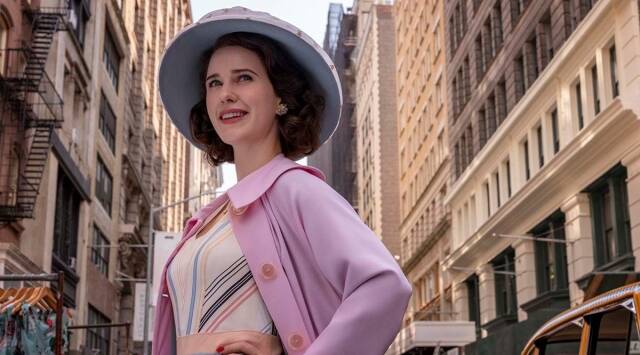
Why Mrs. Maisel was wrong


Warning: This post contains minor spoilers for Season Five of
The Marvelous Mrs. Maisel.

Peak TV may be the best thing that ever happened to comedy. While the big screen has largely given up on the funny, instead churning out an endless array of comic book movies, streamers like Netflix and Hulu have filled the gap with a wealth of sitcoms. Ted LassoBarry (at least that one started out a comedy--what it ended up as was brilliant). What We Do in the Shadows. Hacks. And what may be my personal favorite (depending on what day you ask me), The Marvelous Mrs. Maisel.

But these shows aren't just funny. They're also smart. Prestigious. Groundbreaking in a whole host of ways. And they have a lot to say about, well, stuff.

"I know funny"

Mrs. Maisel is definitely one of those shows with something to say. A lot of ink (pixels?) have been spilled about its portrayal of feminism, especially with regards to Midge Maisel's struggle to find her place in a male-dominated field. And that's wonderful. But I also love what it has to say about making comedy.

All through the first four seasons, we watched Midge slowly build her career around a new concept in stand-up: making the jokes about your own life, in your own voice, about your own experiences.

But Midge's career took a significant detour in season five, episode two ("It's a Man, Man, Man, Man, Man World") when she lands a gig as a staff writer for Gordon Ford, a Jack Paar-like talk show host.


At first, she struggles to switch her comedy style from personal anecdotes to topical gags, but before long, she comes up with what she's convinced is a sure-fire hit and she pitches it to the other writers:
MIDGE: There's going to be a baby in the White House, little JFK, Jr. It'll be a clean transition. White House staff already learned how to change diapers with Eisenhower.

ALVIN: "A" for effort. Cec?

MIDGE: Oh, now wait a minute.

ALVIN: Yeah?

MIDGE: I'm sorry, but that last one was funny.

ADAM: No, it wasn't.

MIDGE: Yes, it was.

MEL: No one laughed.

MIDGE: I think the audience would, and it's topical. He wants topical.

CECIL: A joke is not funny just because you say it's funny.

MIDGE: No, it's not funny because I say it's funny. It's funny because it's funny.

MEL: And you know funny?

MIDGE: Yeah, I know funny.
Those last couple lines of dialogue don't capture the mounting hostility between Midge and the other writers. But it was definitely there. And that's where Midge was wrong.

Not because the joke isn't funny. I think it is. Midge is wrong because she "knows" it's funny.

Humor is the most subjective thing in the world. Whether something is funny depends on a thousand variables. The flow of the joke. The timing of its delivery. The person delivering it. The time period in which it's told. Recent current events (nothing was funny immediately after September 11). And perhaps most of all, who it's being delivered to. and the identity and mood of the people.

Because of all of these variables, nobody--not even an experienced comic--can know whether a joke is funny. You have to test it out, and then see if people laugh. If they do, it's funny. If they don't, then it's not, at least not in that time and place.

The wrong joke

A perfect example of this is a joke she wrote in episode three, "Typos and Torsos." Here she came up with another joke, and it became the first of hers to make it to air:

"Mel Blanc, the voice of Bugs Bunny, was recently in a car accident. He's recovering nicely, though authorities are still questioning the voice of Elmer Fudd."


This one doesn't work at all. Why? Because Elmer Fudd's unique speech habits aren't primarily noted for being slow. They're noted because of his speech impediment--that whole "wascaly wabbit" thing.

A better choice? Porky Pig. His stammer made him take forever to finish a sentence.

Gordon seems to have agreed that the joke didn't work, because he purposely fumbled it during his monologue. After the show, Midge confronts him about it.
MIDGE: You blew the joke. It's okay.

GORDON: I did that on purpose.

MIDGE: You blew a perfectly good joke so you could point out to the audience that you blew a perfectly good laugh?

GORDON: Yes. They love that. It makes me human, and I got a laugh.

MIDGE: Yeah, but it was the wrong laugh.

GORDON: A laugh is a laugh. There is no wrong laugh.
Maybe I don't know as much about comedy as an experienced stand-up comic, but I do know that joke was never going to get a laugh. It was the wrong joke.

Flawed heroes

But I don't want be too hard on Midge. The media has been hard enough, with essays and editorials slamming her for everything from being an absentee mom to outing her boss when it was a possible death sentence to do so.

Here's the thing. I don't think series creator Amy Sherman-Palladino intended Midge to be a paragon of virtue or someone we should all seek to emulate. And why do we need her to be? She's deeply flawed, something we've seen a ton of male protagonists be without feeling the need to trash them (Calling Tony Soprano! And Walter White! And Barry Berkman!). But somehow, when the protagonist is a woman, it's cardinal sin to be less than perfect.

No, the whole point about Midge being brash and outspoken and obsessively focused on her career is to show that that's what it took to succeed in a man's world.

In a lot of ways, it still is.

Friday, May 26, 2023

On intelligence--artificial and otherwise

There's been a lot of talk about artificial intelligence lately. Your local news show tries to explain what it is. The financial media talks about all the industries it'll disrupt. Trade journals warn about the jobs it'll eliminate. Heck, the Writers Guild of America is currently on strike because of it.

But is it really as bad as people say?

Well, yes and no.

A test case

At least that's the conclusion I came to after reading a fascinating article in The Hollywood Reporter. In it, reporter Lesley Goldberg asked ChatGPT to write a scene for the sitcom 30 Rock.

Goldberg gave the chatbot simple instructions. Write a scene about four of the characters from the show going on strike and how it impacts the show-within-the-show that they work on.

As it turns out, the plot it came up with was pretty good. There was plenty of conflict and the narrative flow made sense.

But there were two major flaws with the script. One, all of the characters sounded the same. This is a biggie. Every story, every TV show, every movie has to give each character a unique voice or the writing will came out flatter.

And two, it didn't come up with a single gag. Obviously, this is an even bigger biggie.

I'm not surprised. AI engineers have yet to figure out how to impart a creative spark to their chatbots. All they can do is scrounge the internet looking for patterns and then rearrange those patterns into a poor semblance of originality.

The real danger

I'm not worried that AI will replace writers. It won't and I honestly don't think it ever will. Creativity doesn't come from dumping existing works in an electronic blender. It comes from creating something new.

No, my worry is that Hollywood producers will think AI can replace writers--and act accordingly.

I support the striking writers. They need--no, they deserve--guaranteed more money and longer employment terms. But I think they took the wrong tack on this vitally important issue.

Of course, they want to prevent producers from using AI on their own to generate story ideas and write scripts without the input of, you know, actual human writers. But they also want to protect their right to use AI in their writing. And not to share any credit with it.

I don't understand why any writer would ever want to use AI. If I reach the point where I'm that hard up for ideas that I need to rely on a computer to provide them, I'll quit writing.

Plus it sets a bad precedent. If writers can use AI, why shouldn't producers also be allowed to use it?

Not all bad

Sure, if you're an office drone putting together a financial presentation, go ahead. Use AI to make your job easier.

Or if you're the only reporter on a small-town newspaper and you just don't have time to fill those pages every day, fine. Newspaper articles are supposed to have a uniform voice anyway.

But in a creative field, where you're paid to be creative, original, to really say something? Never. Never. Never ever. And the WGA writers need to get that in, well, writing. Now.

If they don't, then I fear for our future. Not just because thousands of writers will be out of work, but a much more dismal fate. That all of our entertainment will be bland and unfunny as that 30 Rock scene.

We can't let that happen. Not now. Not ever.

Monday, April 24, 2023

On laptops and Goldilocks and repair scams

I'm not one of those writers who can write longhand. I live and die by my laptop. If it's not working, I'm not working.

A writer's best friend

Which is why I was devastated a couple months ago when my three-year-old Lenovo died. Or maybe I should say it was wounded. The laptop still powered on. It still let me open Word and stuff. But it wouldn't talk to the internet. It didn't even see my home wifi network.

In fact, just before it broke the little window that pops up showing you what networks are available started freaking out, flashing though all of them, one by one, until in a spectacular display of pixels, it crashed.

Okay, I made that pixel part up. But the laptop was totally incommunicado, at least where the Internet is concerned. I assumed the network card had blown, which could be a very pricey fix. Even just having a technician open a laptop to take a look inside can run into hundreds of dollars.

Did you ever open one up? A long time ago, on another laptop far far away, I thought I could fix a loose power cord socket. Boy, was I wrong. I was able to open the laptop, all right, but as soon as I did, the guts spilled out all over the places: cables and cords and teeny tiny chips. It's crazy how much stuff they cram inside on of those things. And even crazier for me to think that I'd be able to cram it all back in. Spoiler alert: I didn't.

But I digress.

The point is, I had no internet connection. And without the internet, I lost access to Movie Magic Screenwriter, the software I use to write my plays. (Don't get me started on Final Draft.) I needed to do something. 

Trial and (lots of) error

So I started looking for a new one. And like Goldilocks, I tried two before settling on the third. The first one, a 15.6" Lenovo, was too big. The keyboard was just a lot, and when you spend hours a day typing, typing, typing, the feel of the keys are, well, key. So back to Amazon it went.

The second, a 14" Lenovo, was the right size and the keyboard felt good, but it wasn't a touchscreen, even though Amazon said it was. And that was a showstopper. After just an hour of playing around with it, my fingers ached from using the touchpad to move the cursor around. Back that one went as well.

For the third one, I tried something radical. I went to an actual store--my local Best Buy--to try out their selection of laptops before committing to one, and I ended up taking home a 14" HP (apparently, Lenovo no longer offers a 14" laptop with a touchscreen). I'd never had an HP before, and it felt pretty good under my fingers, even though the keys were a little clunky. At the store, I practiced typing for what must have been an hour and it seemed like something I could get used to. I was sure what few typos I made would stop once I got familiar with the layout. So I bought it.

But after two months of daily usage, I was still making a lot of typos--the keyboard just never felt quite right--and I was starting to miss my Lenovo. The keys on that laptop were nearly flush with the surface and required only a very light touch. Seriously, typing on that baby made your me feel like they were gliding across a velvet cloud. 

So I decided to take the Lenovo to my nearest Data Doctors and at least find out what it would cost to fix it.

After the obligatory patronizing advice ("It could be your home network") and then confirming that the problem was in fact with the laptop, the Data Doctors guy said they'd charge me $60 to diagnose it and would offer me a little something they called...

"Options"

Despite the ominous sound of that, I thought it was a reasonable deal and accepted it.

A day later, the guy calls me and says they don't know what the problem is, but they think it may be the driver and they can fix it for $250 membership which includes one year of repairs, their own cloud service (which I don't know what it is), and their own anti-virus software (ditto). I said no, I just want them to fix problem that, you know, I brought it in for. They said sorry, that was one option they didn't offer. 

So I took my laptop home. And guess what? The problem was gone. As soon as I fired it up, the Lenovo saw my home network and connected to it. Apparently the problem had been the driver, of all things, and Data Doctors happened to fix it while they ran their diagnostics. A potentially serious problem taken care of for a relatively paltry $60.

Which leads to two possibilities: 1) Data Doctors knew they'd already fixed the problem, in which case they were completely shady by attempting to strong-arm me into paying another $250 for essentially nothing, or 2) they didn't know they'd already fixed it, in which case they were completely incompetent.

I don't know which is worse.

But the bottom line is I now have two working laptops: my beloved Lenovo, and a reasonable backup in case that one crashes again.

Eat your heart out, Goldilocks.

Monday, December 6, 2021

That ticking timebomb

I don't usually discuss movies in this space. In fact, I haven't yet. But no movie has captured the travails and triumphs of the writer's life quite like tick, tick... BOOM!, which premiered on Netflix a couple weeks ago. And I can't say enough good things about it.

The film is based on the stage musical written by Jonathan Larson, who went on to fame and immortality as the genius behind Rent. What is now believed to be an undiagnosed case of Marfan syndrome led to Larson's sudden and tragic death from an aortic aneurysm on the morning of Rent's first off-Broadway preview. He was only 35.

tick, tick... BOOM! was Larson's third musical, coming a couple years before Rent's first staged reading in 1993, but his first to get multiple productions and serious attention.

I saw the stage musical in 2015 at Denver's now defunct Ignite Theater. To be honest, I was underwhelmed by it all. While I was drawn to the premise, I found the music to be mostly unforgettable and the production painfully claustrophobic, constrained as it was to a small black box stage dominated by a stack of weird, too-steep levels. I also felt the main character was unsympathetic and, frankly, annoying--a wannabe composer absolutely convinced of his own greatness despite failing to demonstrate it at any point in the two-hour-long musical.

Here's the thing. Although the musical was largely based on Jonathan's life, and even though the main character is named Jon, the stage musical is only semi-autobiographical. That's because it changes some key facts about Jonathan's life and fills in the rest of the cast with fictional characters. So there's nothing in the stage version that guarantees that he will ever find success.

When it came time to adapt the stage musical for the film, first-time director Lin-Manuel Miranda--who seems to be everywhere these days--made one strategic decision that changed the whole trajectory of the film. What he did, quite simply, is drop the semi.

From the very first scene, the film presents itself as the story of the Jonathan Larson, the creator of Rent. And it reminds us that we lost him right as he'd reached the cusp of success (no spoilers here).

That changes everything. No longer a wannabe, Jonathan is seen as the genius he was. What's more, we feel his struggle every time he runs into a brick wall trying to put his latest musical on its feet. As producer after producer slams the door on his dreams, all we can think is one thing: How can these people be so blind?

Andrew Garfield's ebullient performance also goes a long way toward making Jonathan a character you can't help but love. His Jonathan practically bounces off the walls as he leads his friends in an impromptu ditty about the Bohemian life ("Boho Life") or drools over his best friend Michael's newfound financial success as a Wall Street hack ("No More").

Guess what? The music is no longer forgettable. Larson's angular melodies really benefit from the driving guitar work and dynamic vocal performances they're given here, so much so that I've been humming the tunes almost non-stop still I saw the movie almost two weeks ago,

And let's give Miranda some credit. The guy knows how to stage a musical number. Song after song leaps off the screen with dynamic camerawork and a wry sense of humor. And while the dancing may not be as ambitious as it is in some musicals (this is an intimate, small-scale show after all), it is bursting with energy and perfectly matches the spirit of each piece.

You've especially got to love the chorus of past and present Broadway greats in the moving diner-set anthem "Sunday".

Having belonged to several writing groups, I know that many beginning writers love to write about their struggles breaking in. As if there's something unique or compelling about their story.

I've got one piece of advice about that. Don't. That's a story for the geniuses to tell, not us mortals.

Wednesday, August 11, 2021

Still waiting...


So it's been sixteen months since I signed with a literary agent and I feel as far from getting a book published now as I did then.

Book publishing is slow. And COVID hasn't helped. Because of the uncertainty of the effect the pandemic would have on book buying, editors put off making offers and already scheduled releases were pushed back several months or more. Things are opening up now, but I'm not sure the publishing work is quite back to normal.

I currently have three books out on submission--one has been out since April 2020--and I've only gotten a few rejections (which is good) and no nibbles. The proverbial molasses in January is faster.

The first book to go out was a chapter book adaptation of The Enchanted Bookshop. It isn't the play that many of you are familiar with. Instead, it's a new story featuring many of the same characters and their adventure inside the novel Treasure Island. My agent, the illustrious Stephen Fraser, submitted it to seven publishers--all big houses where I wouldn't have a chance of getting read without a rep.

As far as I know, it has received one official rejection but I believe that Steve heard from several other publishers that they're not really interested because he's stopped pushing it. And that's disappointing. I thought the concept was a natural for an easy reading chapter book series but that one rejection said that the premise seemed familiar and that the execution seemed old-fashioned, especially with characters like Pollyanna and novels like the Robert Louis Stevenson swashbuckler.

I can't argue with her. It is old-fashioned. On purpose. I can't use contemporary characters and novels with obtaining the rights and I can't be sure those will even be available to me. Besides, the popularity of the play has proven that teachers want to teach their students about these classic books. I still think the book series would find a ready tie-in with library summer reading programs and grade school curricula.

The second book was a middle-grade novel about a kid inventor titled Edison Young and the Ravenous Robosaur. I first wrote it way back in 1999, way back when the world was still innocent and carefree (yeah, right). The novel badly needed updating, but I was able to take care of that in a couple months and sent it off to Steve in August. He absolutely loved it and promptly submitted it to six publishers and even handed it off to the agency's film agent.

So far, Edison Young has received four rejections. One publisher loved the humor but said the set-up and execution felt overly familiar. Another said she found the concept intriguing and the imagery well-done but she didn't fall in love with the writing enough to take the plunge. A third thought the book was too short and the story undeveloped. And the last one brushed it off with a perfunctory "not my cup of tea."

Steve hasn't given up on this one yet, but new markets are few and far between.

And that brings us to my third submission, a chapter book version of Wicked Is As Wicked Does. This one is a direct adaptation, featuring all the characters and plot points of the play. But that title is way too long for a possible series so I shortened it to just The Wickeds.

I was worried about this one. The first two got immediate and extremely enthusiastic responses from Steve. In fact, he read them both in just a few days. And he sent them out to publishers a day or two after that.

This one was different. Six weeks after I sent it to him, he still hadn't read it.

Wait. Let me change that. He started it, but hadn't finished it. Which may be worse than not starting it at all. At least that can be blamed on being busy. Stopping halfway through can only mean one thing. It didn't grab him.

I thought the book was done for. Kaput. Dead on arrival.

Then, a few days later, I got the email. He finished it. And he loved it, calling it "completely hilarious."  As it turns out, he really had been too busy to finish it. He had a boatload of deals to negotiate.

He ended up sending The Wickeds to--not six, not seven--but eleven publishers. That was a month ago and I still haven't heard anything.

Do I wish things moved faster? Yeah. Is it driving me crazy? Kinda. But I just keep reminding myself that I'm in a much better position that I was two years ago, when I didn't have anyone representing me.

The books are out there, somewhere. And any day, I could get The Call (or, more likely, The Email) telling me I'm going to be a published novelist.

In the meantime, I've got the play commission to keep me busy. And a couple more play ideas I'm burning to write.

This is, after all, is the writer's life. Never stop writing. And never, ever stop hoping.

Tuesday, June 8, 2021

Ten years and counting...


Well, it almost slipped by me without a peep, but I just realized that today is the tenth anniversary of this blog.

When I started it, I'd just received my first offer from publication. It came from Pioneer Drama Service and was for my one-act comedy The _urloined Letter, which had received its first production just eight months earlier.

I wanted to start the blog because I was excited to share this news (I'd been trying to get published for fourteen years). But I also figured now that I was a big-time published author (cough!), people would be clamoring for my insight, much as I'd clamored for insight from those writers who had come before me. 

Ah yes, The naivete was thick.

Of course, I quickly ran into Hurdle #1 for the new blogger. What to write about.

So many baby bloggers rush into their first few posts, flush with enthusiasm and buzzing with ideas. And then they discover that they really didn't have as many ideas as they thought. And they didn't get as many hits as they expected. And that writing is hard work.

I've never had a problem coming up with ideas. I just write about my career as it develops: new plays coming out, new countries where those plays are being performed, mentions in the media. And yes, the occasional piece of writing advice.

I also don't worry about hits. I get ten to thirty a day. Not as many as I'd like, of course. But I get enough emails from followers that I know the blog is proving useful to teachers and directors looking for additional information on my plays and seeking advice on their productions.

Of course, I also ran into Hurdle #2. Finding the time to write.

This has been more of a struggle. With a full-time engineering job and an hour and a half of writing every day--not to the mention the normal daily and household management stuff--my brain is often too mooshy at the end of the day to put together two more words. 

But early on, I made a promise to myself that I would write at least one post a month. And I'm happy to say I've kept that promise.

Ready for some stats? Sure, you are!

Over the last ten years, I've received a total of 86K page views. And sure, a lot of those were bots . I know this because, for a while there, they were spiking like clockwork every two weeks. But those have largely subsided now. Why, I don't know. Maybe Google has cleaned up their Blogger counter algorithm.

My most popular post of all time is The Enchanted Bookshop is Now Available with around 2300 views. It's the post that announced the release of my bestselling play and describes my process for selecting the six famous literary characters around which the play is centered.

I have no idea how people are finding this post because it doesn't show up very high in search engines. Maybe they're finding the blog first and then searching for "enchanted bookshop" within the blog. A good reason for those of you with your own blogs to add a search field, if you don't already have one.

After that, the number of views drops off dramatically. My second most popular post is The Hero's Journey in Star Wars with 563 hits. It's based on a popular talk I gave at the Colorado Thespian Conference and is one of my free really hard-core writing advice posts. If you need a quick intro to the three-act stroy structure, I highly recommend it (it even includes a downloadable 

My follow-up post, The Hero's Journey on Legally Blonde, has been more popular lately. I don't know. Maybe I should write a series of those. 

My third most popular post is Trouble in Paradise Junction to be published with 472 hits, no surprise there because that's another one of my bestselling plays. The post describes my three-year struggle to finish the play and ends with Ted Lasso-like hero Joe Goode's monologue.

Another post that isn't quite as popular as these but that I'm still proud of is So You Want to Do a Staged Reading with 301 hits. In it, I offer some advice from having produced the first staged reading of my play The Butler Did It! If you're in a similar position with your own play, I recommend you check it out.

So, will this blog last another ten years? Who knows? I don't even know if I'll last another ten years. And with the onslaught of Facebook, Instagram and other social media time sinks, blogs seem to have gone the way of the dinosaur.

But I can guarantee you one thing. I'll still be writing something.

Oh, and if you're interested, here's that first post.

Naivete indeed.

Friday, October 23, 2020

The room where it happens

It's small, but it's mine


I've written a lot of places. Sometimes it feels like I've written everywhere. Coffee shops. The backseats of cars. Motel lobbies. Poolside cabanas. The middle seats of airplanes. Pop-up campers. Busy teachers' lounges. Cramped little corners of lakeside cabins. Once I even wrote in an old train station that had been turned into a swanky mall (Denverites will know where I'm talking about).


But my favorite place to write has always been home. And now that many of us have been forced to spend a lot more time at home, I thought it would be fun to share my little space.


Fifteen years ago my wife and I lived in a wooded area outside Colorado Springs called Black Forest. Hundred year-old ponderosas grew for miles in every direction, and my office was in one corner of our house, with windows looking out at those ponderosas on two sides.

It was gorgeous. But it wasn't necessarily the best place to write. The natural beauty that surrounded me was a distraction in itself, and I often caught myself staring at a mule deer munching grass along the edge of our driveway or one of the area's unique squirrels with their tufted ears and jet black fur instead of writing.

Which is why the office I have now may just be the best place I've ever written.

My wife and I bought the house in 2017 when we first moved to Arizona. The office itself is a cozy little room with an exterior door and windows on either side of that door. This allows me to get my daily allotment of sunshine so I don't feel like a mushroom on those marathon days when I'm scribbling away for hours in order to meet some crazy deadline. But the office looks out on a simple courtyard--a relaxing sight to be sure, but not one that's going to distract me.

Not the world's most scenic view, but it works for me

Because of the COVID crisis, and the economy, and the fact that apartments in the Phoenix area are way more expensive than they should be, both of our daughters have moved back in with us. As have their adorable but very opinionated dogs. So these days it often feels like our house is bursting at the seams.

And that leads me to the other great advantage of my office. It's situated at one end of our house, directly opposite the activity center at the other end, so even with the TV blasting and everyone talking and the dogs in full woof, I can barely hear a thing.

Like most writers, I used to write at a desk. But when we moved into the house I discovered that the office was smaller than I remembered and the desk was bigger than I remembered and there was no way I was ever going to fit it inside the office unless I set it on its end.

So I got rid of it. Now I do my writing in a leather recliner, and I would never go back. With a laptop, who needs a desk anyway?

Who says you have to hunch 
over a desk when you write?

My office is a place dedicated to reading and writing, with a bookcase in one corner and cast photos and newspaper clippings from some of my shows on the walls. But my favorite spot is the top of the file cabinet, for that's where I display some of the mementos that directors of my plays have been so generous to share with me. 

Look at the photo below, and you'll see the knife from The Butler Did It!, the KUKU sign from The Last Radio Show, the sarcophagus lock from How I Met Your Mummy and the diamond-studded cat collar from The Purrfect Crime.

And the puffin? Well, I could say it's my favorite animal, and that would not be wrong. I could say it inspires me to write about exotic creatures and far off places, and that would also not be wrong. But the real truth is that it was one of our daughters' Beanie Babies when they were younger and I couldn't bear to part with it after they grew up.

So yeah, writing is important. But it's not everything. 

A few mementos from my shows

Friday, April 24, 2020

You can go home again


Thirty-nine years ago, I couldn't wait to leave my hometown.

I wasn't the only one. In the early 80's, Beaver Dam, Wisconsin (population 14,000) seemed like a dead end to me and a lot of my classmates who were heading off to college. We wanted to move to the city, make our fortunes, live the big life.

I was reminded of this yesterday when an old friend posted the above video on Facebook. It's an episode of Around the Corner, a Milwaukee-based PBS show that profiles the many proud towns and villages of the Badger state.

Last week it was Beaver Dam's turn, and as I watched it, I was happy to see that the community theater--the place where I first fell in love with theater--is thriving.

Back in my day, they used to perform their shows in the town's only movie theater (a single screener, of course), and they made room for the stage by pulling out the first few rows of seats. Well, as the video shows, that same group has just moved into a large, dedicated venue equipped with the latest sound and lighting equipment.

But the video reminded me of all the other things Beaver Dam has going for it--then and now. The county fairgrounds (at one time, the Dodge County was the largest county fair in the county). The beautiful old library (now a museum). A wonderful park system. And, of course, Beaver Dam Lake. It was too shallow and muddy to swim in, but I have many fond memories of fishing and ice skating on it.

Yep, Beaver Dam was a pretty terrific place to grow up. And it only took me thirty-some years to figure that out.

Tuesday, March 31, 2020

Making connections


Oh, what a different a month makes.

On the last day of February, we were all going about our everyday business. Going to work. Eating at restaurants. Rooting for our favorite sports teams.

Now it's the last day of March, and thanks to the coronavirus, we're all holed up in our homes.

So how are you doing? Are you staying healthy? Are you staying sane?

I'm definitely the former, though how long I can maintain the latter remains to be seen.

I kid, I kid. Actually, I'm staying quite busy and that's because I still have my day job. The company I work for has been deemed an essential business, but this is Arizona, so golf courses and nail salons are considered essential businesses as well. I am, however, working from home.

I won't lie. I love working from home. It almost makes up for not being able to go out to restaurants or movies.

I love sleeping in a little later. I love not having to deal with crazy drivers. I love taking puppy breaks throughout the day. And I love going for walks with my family at the end of the day.


This little girl needs some lovin'.

It's the kind of simple, laid-back lifestyle I've always hoped I'd have if (when?) I'm finally able to write full-time.

Unfortunately, it looks like that last part might be delayed a while. Due to the pandemic, schools and community theaters are cancelling their productions left and right, and every playwright I know has seen their royalties go to zero.

I'm going to be fine. But I feel bad for the drama teachers and student actors who've been working so hard on their shows--shows which may never see the light of day.

So I was glad when Pioneer Drama Service approached me this week about participating in a new program. It's called Playwright Connect, and it's a way for Pioneer to link up drama teachers with the author of their cancelled spring show. As playwrights, we're here to help the show go on.

Want us to watch a virtual performance of your show? We can do that! Want us to offer feedback new scenes your students wrote? We can do that too! Or we can hold an online Q&A with your cast and crew. It's all up to you!

Interested? Email Pioneer at connect@pioneerdrama.com or give them a call at 800-333-7262 (but note their new limited hours on their website). Their staff will be happy to help you figure out what makes the most sense for you.

I'm really excited to be a part of this new program. I hope you'll take us up on it.

Yes, we'll get through these difficult times. But it will be a whole lot easier if we do it together.

Wednesday, September 18, 2019

On Sharpay, Grandpa Joe and lotteries


So here's a fun story. It seems that Emily Cacnio, a student at the American Musical and Dramatic Academy in New York City, put together a slide presentation for her English class arguing that Sharpay Evans was not the antagonist of High School Musical but the hero.

Seems crazy, doesn't it? But she makes some good points.

Sharpay and her brother Ryan were the real professionals in the situation, not Troy and Gabrielle. They're the ones who showed up on time for the audition. They're the ones who put together an elaborate routine with original music.

And let's face it. She deserved to be lead. She was clearly more talented.

But Cacnio overlooks a few things.

Sharpay's shallowness and self-absorption make her completely unsympathetic. And in contemporary movies, that's often all it takes to move a character from the hero to the villain category.

She totally tried to steal Troy from Gabrielle. And being willing to do anything to achieve her goals is not the positive trait Cacnio thinks it is.

Be focused, sure. But don't be a jerk.

Plus, I've always felt that at the high school level, teachers have no business casting solely on talent. Their job is education, not entertainment, and you achieve that by giving students at all skill levels as many different roles as possible during those formative four years.

That pretty blonde with the killer pipes and the personality that just leaps off the stage? Think how much better an actor she'll be after stage managing a show or running the sound board.

So yeah, I still view Sharpay as the villain. But I do find it interesting that the writers of High School Musical decided to make the villain someone with a ton of theatrical experience while the heroes were mere dilettantes.

And there can be only one explanation for that. Our country's lottery culture. Why work hard for something if you can win it through luck?

Exhibit A. The candy bar opening scene in the original Willy Wonka and the Chocolate Factory:
Charlie: I've got the same chance as anyone else, haven't I? 
Grandpa Joe: You've got more, Charlie, because you want it more.
You used to see it on American Idol. You see it now on America's Got Talent and a gazillion other reality shows.

The producers on these shows don't promote the contestants who've struggled at their art for years. They promote the ones who recently discovered some innate talent and poopoo professional training because it might spoil their "authenticity".

Well, I've got news for them. Talent is overrated. What leads to success is work. Hard, knuckle-bleeding work. And lots of it.

So while Sharpay may be the villain, there's one small part of me that wants her to win, if only to show that hard work wins over "wanting it more".