Friday, July 7, 2023

Belmont diary: The story takes shape

The biggest challenge in fulfilling a play commission is balancing the needs of the school with the needs of the story. Anyone who's ever written a play, a book, a screenplay--anything fictional, really--is familiar with that point when the characters come to life on the page and start hijacking the story for their own purposes.

That's when the writing is fun, when the characters take on a life of their own and tell you where they want the story to go. But that's not always where the school or other commissioning body wants it to go.

What's Opera, Doc?

I'm at that point with my latest commission, the backstage comedy I'm writing for Belmont Day School. As I explained in my previous post about the play, one of the requirements was that the play-within-a-play needed to have a magical/fantasy theme. But they also wanted it to include a swordfight. What would it be about?

Well, my first thought was a medieval-type fairy tale. There's a lot you can do with them. The problem is that they're overdone. And there's nothing inherently funny about them So I racked my brain a little more. Who has swords, believes in magic, and are inherently funny?

That's when the idea came to me. Vikings! They used massive broadswords, but they're still swords. I could easily include some sorcery or a dragon. And come on. Those horned hats? Hilarious! And, other than that Wagner opera that Bugs Bunny made fun of, there really hasn't been any stage musicals set in that long ago era.

So I ran my idea past Chris, the theater director who commissioned the play. And he ran it past the school's DEI director. And she responded that they would prefer that I not go in that direction as it could be interpreted as mocking Nordic people.

Which is true, and shows how carefully we have to tread to not single out any particular ethnic group for mockery. Although I thought in this case it might be acceptable because all those Andersens and Hansens and Larsens are often the first to make fun of their Viking forebears. (And I should know. I'm almost a quarter Nordic myself.)

A new idea

Chris responded with a suggestion of his own: aliens. Which I liked, except that aliens don't typically use swords. But someone they fought against might. And that led to my next brainstorm: Pirates vs. Aliens. Kind of like that 2012 movie Cowboys and Aliens.

The difference is that the movie, despite being based on an exceedingly silly premise, was presented in a serious, straightforward manner, whereas my Caribbean-set version will be very silly indeed.

Besides, pirates don't make fun of any particular ethnic group, do they?

I even came up with a fantastic title for that play within a play. But that'll have to wait for another blog post....

Stanislavsky who?

Another challenge with this commission is that the school is very specific about the number of lines per part. That's because they've already lined up their cast and asked each of the kids how many lines they want to have.

As it turns out, they asked for 11 large roles (50 lines or more), 17 medium roles (20 to 50 lines) and 7 small roles (fewer than 20 lines). But there has to be a total of 38-39 roles, so I need to add 4-5 roles to those categories.

The problem is that a well-written story can't have 11 heroes. You really need to center the story around a single protagonist who drives the narrative. Otherwise the audience will lose track of the goal and you'll lose any sense of forward momentum.

At least, that's what they tell you in screenwriting. In theater, however, you can cheat a little. Because, let's face it, theater audiences don't expect as tight a story as movie audiences do. By splitting the role among a trio of characters who created the musical (a composer, a lyricist, and a book writer), I can sort of have three protagonists. The director of the musical also has a major role, and by having him quit halfway through the story, I can justify bringing in a second director.

But the story can't be a mess either. Five protagonists is as far as I can stretch things. And those five will get the bulk of the lines, leaving fewer for the rest of the roles.

So what do I do? Simple. Build up those other roles so even if they're not big, they're entertaining to the audience and a whole lot of fun to play.

Well, maybe that's no simple. But that's part of the job. And one I look forward to tackling.

Saturday, June 24, 2023

Production news roundup

Summer's usually the dry season for me--both weatherwise here in the Blast Furnace of America and playwise around the country. With schools taking a two- to three-month break, the number of productions drops off dramatically.

But it can also be an exciting time. For summer is the season when community theaters often do their annual all-youth show, or give special outdoor performances in parks and other interesting places.

That's especially the case this year, as I'm getting a healthy number of productions in this sunniest of seasons and at least three of them got big write-ups in the local media.

Kiwi kraziness

The first is for a production of Madhouse! by Stratford High School in Stratford, New Zealand, where it's not summer but winter and schools are fully in session. 

Instead of a preview article, the Stratford Press gave the show a full-blown review and it was an all-thumbs-up rave. Writer Ilona Hanne sends a nice compliment my way by describing the script as "a great read on its own," but saves her greatest praise (as she should) for the cast.

"With characters mainly aged over 18," she writes, "and a cast mainly under that, it's particularly impressive just how well the actors portray their characters, but in some cases actually draw their characters out to be much more than the lines alone allow for."

Which warms this old playwright's heart greatly, for I've always felt that theater is the most collaborative of the arts, and I count on the director, actors, and designers to put their own twist on the show and really make it their own. (The article also taught me a new Maori word.)

Iowa improv

Players Workshop Theater of Burlington, IA got an equally positive review from The Hawk Eye ("Iowa's Oldest Newspaper") for their production of The Enchanted Bookshop, which has become something of a staple for summer theaters.

Margie is of course the lead in that show, and the literary characters who come to life also play key roles in the story, but in this production it was none other than Margie's sassy cat Bombalurina who stole the show, "uttering only sighs, meows and so on", as writer Bob Saar puts it. In fact, Saar goes on to write that the best line in the play was Bombalurina's "perfect catlike response" to a request from Margie: "Nowww?"--a line that I didn't even write!

Saar offers one more note, a spoiler alert as he puts it. "You who are faint of heart may want to cover your eyes during the scene where the burglars tear pages out of real books. Ouch!"

I've read many, many reviews of The Enchanted Bookshop over the years, and it seems that nearly all theaters opt for a tamer take on the scene. Either the actors merely throw the books on the ground or they pull pre-torn sheets of paper out of the books.

I get it. As a book lover, it hurts me to see books damaged in this way (almost as much as it hurt to write this scene!). But for maximum emotional impact--and for hammering home just how precious books are--I urge producing groups to actually destroy the books. You can always buy already damaged books from thrift shops or library clearance sales.

Buckeye boldness

Finally, there's Thompson Square Community Theater of Thompson, OH, whose production of The Enchanted Bookshop got a nice preview article in the News-Herald.

Reporter Steve Couch took a different and very fun tack here, asking many of the cast members what they thought of their roles. My favorite quote came from Seri Buckner. “I enjoy playing Dorothy because she is pretty bossy and sassy in this show!” says the young actor. “My favorite scene is one where I get to yell at Robin Hood. I get to tell off a lot of people in the show.”

But it sounds like all of the kids in this show had a great time. As Breanna Toth, who plays Heidi, says, "I really hope the audience can see how hard we worked on this play but also see how much fun we had at the same time. This was such a fun play to work on and I really hope it shows to the audience."

It's not the sunny weather or the break from school or even the summer productions themselves that make this season so special. It's the attitude of kids like these, who give up their coveted time off to take to the stage and make magic happen.

A great big kudos to all you summertime (and in the southern hemisphere, wintertime) actors!

Tuesday, June 13, 2023

Belmont diary: We begin again

Loyal followers of this blog (all three of you) know that a couple of years ago, Belmont Day School in Belmont, MA commissioned me to write a play. Why commission a play at all? Well, it turned out they couldn't find any plays that met their DEI standards. They wanted the play to avoid gender-specific roles as much as possible and not include any gender, cultural, or racial stereotypes. 

Equally important was that the play had to be set in a creepy mansion feature meaningful roles for 40 students. Not big roles, necessarily, but meaty ones that really allowed the students to sink their teeth in.

What I came up with was It's a Madhouse!, a full/length comedy/mystery revolving around a race to find the hidden inheritance of a best-selling mystery author. It was published by Pioneer Drama Service last year and was a hit from the start, garnering 19 productions in just a few months. That success convinced Pioneer to publish a one-act adaptation so I cut the script's length from 80 to 60 minutes and the cast from that whopping 40 to 28. The much more succinctly titled Madhouse! has also been doing well, getting 7 productions.

So last week I was thrilled to hear from Christopher Parsons, the head of the school's theater department, with another commission offer. They again wanted a large cast play--38 to 39 parts--but this time they'd come up with a unique concept.

Essentially the play is to be a musical without songs. The idea is that the story needs to center around the performance of an original musical, either in Hollywood or on Broadway, but every time the performers open their mouths to sing, they get interrupted.

Now you may think that such strict requirements might squash creativity, but the opposite is usually the case. "Art consists in limitation." Or so G. K. Chesterton said.

This case was no different. My mind immediately stared buzzing with ideas. To me, the play had to be set during the rehearsal for a Broadway workshop performance. And I started brainstorming ideas as to what could cause the interruptions. One of my favorite ideas was having a construction team come in and interrupt the performance with their noisy and very annoying work.

It was a good idea. But not good enough. That's when my primary collaborator--also known as my wife Tammy--saved the day.

I mentioned the idea to her over dinner and she immediately came up with a tweak that made all the difference. Change the construction team to a demolition team that's preparing to dynamite the building the next day. Being a connoisseur of fine puns, Tammy also came up with the perfect title: Bringing Down the House.

I put a detailed synopsis together--including the efforts of an historical preservationist and several protesters to save the building--and sent it to Chris, who loved it. So I'm off and running. I've got until October 1 to complete the 80- to 90-page script, but I have no doubt I'll make it. If I ever get stuck, I can always pull in my collaborator.

AI, eat your heart out.

Wednesday, June 7, 2023

Why I quit Duolingo

After 1001 consecutive days--almost three years of studying--I quit Duolingo.

Okay, so it wasn't quite consecutive. Anyone who's used Duolingo long enough knows that after a certain number of lessons, they allow you to buy streak freezes. Break your streak for just a day or two and they'll keep it going the day after that.

Still, over the last three years, I think I've only used streak freezes three times. So yeah, that's a lot of studying.

I started with Spanish, but quickly switched over to my true lingua amata, Italian. It took me two years to complete all the lessons, which at the time was arranged in the shape of a tree (you could choose lessons from several units in the next level, but you had to complete a minimum number of lessons in any one level before moving on to the next). And then I went through the entire tree again to earn the Legendary trophy for each unit.

Meanwhile, I also played around with other languages, either because of earlier interest, as with German (I passed my fourth-year German class in college--just barely--and now remember almost none of it), or because of newly gained passions (Greek, French, Norwegian).

Dissing Duo

Duolingo gets slammed a lot. Some critics say its instructional format leads to poor retention of the language you're learning. That may be true, but then that's true of all language tools if you don't use them.

Others complain that the sentences are useless in practical situations. Who can forget Non so se lei abbia usato un coltello o una bottiglia. or, in English, I don't know whether she used a knife or a bottle (compared to the other languages, the Italian unit has a disturbingly large number of sentences like this). 

This is also true. But the point of learning a language isn't to memorize a list of common phrases that you think you'll use again and again. It's to learn how the language works and to be able to form sentences--any sentences--that you might need.

In praise of the owl

On the other hand, Duolingo doesn't get nearly enough credit for the things it does well. First of all, it's completely free. Yes, they hit you up for a paid membership, but its benefits are minimal and you can access every one of their languages and lessons without it and without any annoying advertising.

And let's admit it. Duolingo is a lot of fun. The short lessons, the gamified format, and yes, those goofy sentences, all lead to a truly enjoyable learning experience, one I looked forward to every day.

Finally, Duolingo is effective. After completing the Italian course, I found I was able to understand 30% of the written language (at least the simplified Italian of websites and blogs) and maybe 10% of the spoken language. Nowhere near fluent, but it was a start.

The competition

In comparison, Babbel is boring and repetitive, making you prove you've learned a single word or phrase through a seemingly endless array of exercises before moving onto new words or phrases (never to return again). Pimsleur only seems to care about how the pronounce the words. Rosetta Stone doesn't even offer a free trial.

Of all the competitors, the little-known Busuu is the closest to Duolingo in providing a fun, effective way to learn a language. The lessons are short, offer an interesting array of topics, and get you into real-life conversations quickly. And you can access 100% of their material for free--as long as you're willing to watch one brief video ad per unit.

The one drawback to the app is that it's fairly buggy. I guess sometimes you do get what you pay for. 

Test driving these other tools opened my eyes to one important and widely overlooked fact. Duolingo is the only major language tool that has you translate new, complete sentences into your target language. There are hundreds of them and they are repeated at random and infrequent intervals so that you can't rely on your short-term memory to recall them. You have to understand how the language works.

It's also the only tool that fully explains the grammar rules behind the sentences. And it's the only tool that provides forums where language learners can ask questions about vocabulary, grammar, and pronunciation and have hem answered by other learners as well as native speakers.

Scratch that...

Duolingo was the only tool that offered those last two benefits. But earlier in this year, they decided to drop their original lesson structure--in which you could choose which aspect of the language you wanted to study (e.g pronouns, adverbs, the past perfect tense)--to a single path from which you could not deviate and which scattered those specific aspects around in a seemingly haphazard fashion. They also grossly slimmed down most of their tutorials.

That's why I quit.

I don't know why they made those changes. I think they wanted to copy their competitors, but in doing so, they got rid of the things that made them better, and it made me mad. It made a lot of Duolingo loyalists mad. Some of them even started a petition in an attempt to force them to return to the previous format.

And a lot of of them, like me, quit.

Besides which, Duolingo is all about becoming minimally conversant in a large number of languages. It really doesn't provide the tools or the motivation to improve your competency in a particular language once you've completed its track. 

Well before I quit Duolingo, I'd spread out to other tools, and hose have enabled me to boost my reading and listening comprehension rates to 90% and 50%. Here are the best:

1) Coffee Break Languages Podcasts

There are a ton of language learning podcasts out there, but Coffee Break Languages is head and shoulders above the rest. What sets it apart is that it avoids the didactic approach of other podcasts, in which a single teacher recites phrases which you're expected to repeat and memorize.

Instead each 30-minute episode of this Scotland-based podcast is a conversation among three people: a language learner (Katy in the first season of the Italian podcast, Isla in the second), a teacher (native speaker Francesca), and a facilitator (Mark, the founder of Coffee Break Languages), who keeps things loose and very, very lively. They start from zero, with the learner knowing nothing about Italian, but soon has her--and you--participating in simple conversations.

Later seasons dump the learner and focus on Francesca and Mark, which allows them to cover more advanced topics (e.g. the dreaded subjunctive!).

Currently, Coffee Break offers just eight languages (the major European languages plus Mandarin and Gaelic), but their coverage of those languages is surprisingly deep. If you want, you can buy a full subscription to the website, which gives you access to a wealth of additional learning materials such as lesson notes and videos.

But if you're cheap like me and you opt out, you'll still learn a lot.

2) Instagram

One of the best things about social media is the huge number of native speakers in any language (and I do mean any language) who've been able to carve out a full-time gig for themselves teaching their language to others.

Some speak slowly so that beginning learners can practice their listening comprehension skills. Others speak faster to provide a challenge for more advanced learners. And almost all of them provide subtitles, although whether you want them in English or just your target language will depend on where you are in your own journey.

In Italian, my current favorites are Peratoons, a series of short, jokey animated cartoons, and BRAVO! Italian with Paola, in which the oh-so-charming host offers a humorous approach to some of the quirks of the Italian language.


Try a bunch of them. Like everything on Instagram, it's as easy to unfollow as it is to follow. And the more you do follow, the more will be recommended to you.

Many of the accounts also offer private online lessons for a moderate fee ($30 to $50 a month).

Of all the tools, these have helped me boost my listening comprehension the most.


3) Other podcasts

Now that I've caught up to the hundred and somethingth episode of Coffee Break Italian, I've branched out into other podcasts which are presented 100% in la bella lingua. Like the Instagram accounts, they cover a variety of topics of interest to language learners, but with their episodes running twenty to thirty minutes, they can cover a lot more ground and in a lot more detail.

Lately, I've been listening to Italian Con Amore on my drive to work because I find Eleonora, the host, extremely engaging as she covers a wide variety of topics, everything from coffee shop etiquette to Italian cinema, gardening in Italy to the country's constitution. My one complaint? She talks super fast!

(Hint: If you have problems understanding your favorite language learning podcast, just decrease the playback speed in your podcast app.)

4) Quizlet


At some point, you're going to understand all of the basic grammar rules of your target language, and the only way to become fully fluent is to learn new words. A lot of them. Like four or five thousand.

How can you do this quickly and (relatively) painlessly? With this flash card app. It's free, but it does bombard you with a lot of useless notifications.

I haven't signed up for the paid version, but this is one that may be worth it as it's relatively cheap ($3 a month) and gives you access to different games that promise to make learning even more fun.

Wrapping it up

So there you have it. Four ways to help you learn your favorite new language. And you don't even need to spend any money. All you really need is time and a strong enough passion for your target language so that you won't give up when the going gets tough. Because you know it will.

Stupid subjunctive.

UPDATE: On August 31, Duolingo updated many of the courses, adding new sentences throughout the path but in turn removing much of the progress students have made. In Italian, that had the effect of kicking me back to the end of 34 units out of 43. That could be frustrating, but it does mean I can start again from where it kicked me back, making the rest of the path seem fresh and new again. I'm excited!

I mean, sure a lot of the sentences are the same. But it never hurts to review a language you're learning (especially since I still get one or two sentences per unit wrong). And seeing the progress I make each day--in my knowledge of the language as well as in the little colored steps on the path--is a nice motivator.

Thursday, June 1, 2023

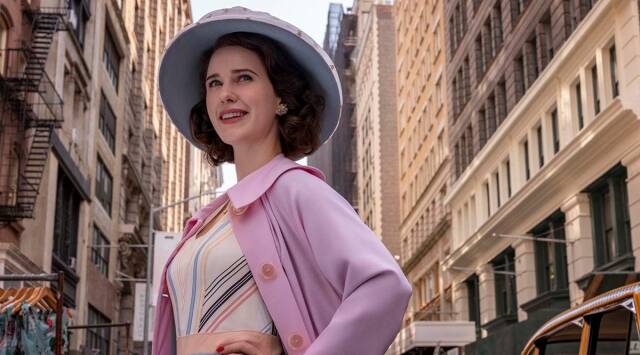
Why Mrs. Maisel was wrong


Warning: This post contains minor spoilers for Season Five of
The Marvelous Mrs. Maisel.

Peak TV may be the best thing that ever happened to comedy. While the big screen has largely given up on the funny, instead churning out an endless array of comic book movies, streamers like Netflix and Hulu have filled the gap with a wealth of sitcoms. Ted Lasso. Barry (at least that one started out a comedy--what it ended up as was brilliant). What We Do in the Shadows. Hacks. And what may be my personal favorite (depending on what day you ask me), The Marvelous Mrs. Maisel.

But these shows aren't just funny. They're also smart. Prestigious. Groundbreaking in a whole host of ways. And they have a lot to say about, well, stuff.

"I know funny"

Mrs. Maisel is definitely one of those shows with something to say. A lot of ink (pixels?) have been spilled about its portrayal of feminism, especially with regards to Midge Maisel's struggle to find her place in a male-dominated field. And that's wonderful. But I also love what it has to say about making comedy.

All through the first four seasons, we watched Midge slowly build her career around a new concept in stand-up: making the jokes about your own life, in your own voice, about your own experiences.

But Midge's career took a significant detour in season five, episode two ("It's a Man, Man, Man, Man, Man World") when she lands a gig as a staff writer for Gordon Ford, a Jack Paar-like talk show host.


At first, she struggles to switch her comedy style from personal anecdotes to topical gags, but before long, she comes up with what she's convinced is a sure-fire hit and she pitches it to the other writers:
MIDGE: There's going to be a baby in the White House, little JFK, Jr. It'll be a clean transition. White House staff already learned how to change diapers with Eisenhower.

ALVIN: "A" for effort. Cec?

MIDGE: Oh, now wait a minute.

ALVIN: Yeah?

MIDGE: I'm sorry, but that last one was funny.

ADAM: No, it wasn't.

MIDGE: Yes, it was.

MEL: No one laughed.

MIDGE: I think the audience would, and it's topical. He wants topical.

CECIL: A joke is not funny just because you say it's funny.

MIDGE: No, it's not funny because I say it's funny. It's funny because it's funny.

MEL: And you know funny?

MIDGE: Yeah, I know funny.
Those last couple lines of dialogue don't capture the mounting hostility between Midge and the other writers. But it was definitely there. And that's where Midge was wrong.

Not because the joke isn't funny. I think it is. Midge is wrong because she "knows" it's funny.

Humor is the most subjective thing in the world. Whether something is funny depends on a thousand variables. The flow of the joke. The timing of its delivery. The person delivering it. The time period in which it's told. Recent current events (nothing was funny immediately after September 11). And perhaps most of all, who it's being delivered to. and the identity and mood of the people.

Because of all of these variables, nobody--not even an experienced comic--can know whether a joke is funny. You have to test it out, and then see if people laugh. If they do, it's funny. If they don't, then it's not, at least not in that time and place.

The wrong joke

A perfect example of this is a joke she wrote in episode three, "Typos and Torsos." Here she came up with another joke, and it became the first of hers to make it to air:

"Mel Blanc, the voice of Bugs Bunny, was recently in a car accident. He's recovering nicely, though authorities are still questioning the voice of Elmer Fudd."


This one doesn't work at all. Why? Because Elmer Fudd's unique speech habits aren't primarily noted for being slow. They're noted because of his speech impediment--that whole "wascaly wabbit" thing.

A better choice? Porky Pig. His stammer made him take forever to finish a sentence.

Gordon seems to have agreed that the joke didn't work, because he purposely fumbled it during his monologue. After the show, Midge confronts him about it.
MIDGE: You blew the joke. It's okay.

GORDON: I did that on purpose.

MIDGE: You blew a perfectly good joke so you could point out to the audience that you blew a perfectly good laugh?

GORDON: Yes. They love that. It makes me human, and I got a laugh.

MIDGE: Yeah, but it was the wrong laugh.

GORDON: A laugh is a laugh. There is no wrong laugh.
Maybe I don't know as much about comedy as an experienced stand-up comic, but I do know that joke was never going to get a laugh. It was the wrong joke.

Flawed heroes

But I don't want be too hard on Midge. The media has been hard enough, with essays and editorials slamming her for everything from being an absentee mom to outing her boss when it was a possible death sentence to do so.

Here's the thing. I don't think series creator Amy Sherman-Palladino intended Midge to be a paragon of virtue or someone we should all seek to emulate. And why do we need her to be? She's deeply flawed, something we've seen a ton of male protagonists be without feeling the need to trash them (Calling Tony Soprano! And Walter White! And Barry Berkman!). But somehow, when the protagonist is a woman, it's cardinal sin to be less than perfect.

No, the whole point about Midge being brash and outspoken and obsessively focused on her career is to show that that's what it took to succeed in a man's world.

In a lot of ways, it still is.

Friday, May 26, 2023

On intelligence--artificial and otherwise

There's been a lot of talk about artificial intelligence lately. Your local news show tries to explain what it is. The financial media talks about all the industries it'll disrupt. Trade journals warn about the jobs it'll eliminate. Heck, the Writers Guild of America is currently on strike because of it.

But is it really as bad as people say?

Well, yes and no.

A test case

At least that's the conclusion I came to after reading a fascinating article in The Hollywood Reporter. In it, reporter Lesley Goldberg asked ChatGPT to write a scene for the sitcom 30 Rock.

Goldberg gave the chatbot simple instructions. Write a scene about four of the characters from the show going on strike and how it impacts the show-within-the-show that they work on.

As it turns out, the plot it came up with was pretty good. There was plenty of conflict and the narrative flow made sense.

But there were two major flaws with the script. One, all of the characters sounded the same. This is a biggie. Every story, every TV show, every movie has to give each character a unique voice or the writing will came out flatter.

And two, it didn't come up with a single gag. Obviously, this is an even bigger biggie.

I'm not surprised. AI engineers have yet to figure out how to impart a creative spark to their chatbots. All they can do is scrounge the internet looking for patterns and then rearrange those patterns into a poor semblance of originality.

The real danger

I'm not worried that AI will replace writers. It won't and I honestly don't think it ever will. Creativity doesn't come from dumping existing works in an electronic blender. It comes from creating something new.

No, my worry is that Hollywood producers will think AI can replace writers--and act accordingly.

I support the striking writers. They need--no, they deserve--guaranteed more money and longer employment terms. But I think they took the wrong tack on this vitally important issue.

Of course, they want to prevent producers from using AI on their own to generate story ideas and write scripts without the input of, you know, actual human writers. But they also want to protect their right to use AI in their writing. And not to share any credit with it.

I don't understand why any writer would ever want to use AI. If I reach the point where I'm that hard up for ideas that I need to rely on a computer to provide them, I'll quit writing.

Plus it sets a bad precedent. If writers can use AI, why shouldn't producers also be allowed to use it?

Not all bad

Sure, if you're an office drone putting together a financial presentation, go ahead. Use AI to make your job easier.

Or if you're the only reporter on a small-town newspaper and you just don't have time to fill those pages every day, fine. Newspaper articles are supposed to have a uniform voice anyway.

But in a creative field, where you're paid to be creative, original, to really say something? Never. Never. Never ever. And the WGA writers need to get that in, well, writing. Now.

If they don't, then I fear for our future. Not just because thousands of writers will be out of work, but a much more dismal fate. That all of our entertainment will be bland and unfunny as that 30 Rock scene.

We can't let that happen. Not now. Not ever.

Tuesday, May 9, 2023

My 12th year sales

Gangbusters. That's the best word to describe this, my 12th year of publication. After three down years, theater is back--and bigger than ever.

It was a very good year

My total revenues were 19% higher than my previous best year, the just-before-COVID theater season of 2018-2019. Weirdly though, this wasn't my best year in terms of the number of productions. I had a total of 328 productions vs. 361 in that now long-ago record-setting year, a 9% drop.

So how did I make more money on fewer shows? Did Pioneer raise their royalty rates and script prices? Not that I know of.

Did the mix of plays produced skew more toward the pricier big-cast plays? Maybe. It's hard to tell.

Did I get more performances per play? Quite possibly. I had a 15-show booking, a 10-show booking, and an 8-show booking (all for The Enchanted Bookshop), which is much higher than I've ever seen before. I also had several 6-show bookings.

Also, streaming has become a popular addition for a lot of schools and that may have boosted my average number of performances per production as well.

Whatever the reason, I'll take it.

The top five

The Enchanted Bookshop was my best-selling play for the sixth year with 107 productions. That's down 31% from the 156 it got in 2018-2019, but it's still triple digits and should be enough to kept it on top of Pioneer's list of top-selling full-length plays. I already have 35 productions booked for next year and I even have one production booked the year after that (talk about planning ahead!).

Second place was shared by two plays: my new coffee shop comedy, Whole Latte Love, and my perennially popular collection of driver's ed skits, You're Driving Me Crazy!, both at 28 productions. What's more, You're Driving Me Crazy! gave me my 21st country with the International School of Kuala Lumpur in Malaysia doing a show in December (it's also been done in South Korea, The Philippines, Panama, the UK, and Australia). 

My restaurant farce Million Dollar Meatballs continues to do amazingly well, snagging 26 productions to come in third. Not bad for an eight-year-old-play.

Placing fourth was another one of my new plays, It's a Madhouse!, which got 19 productions. That makes me very happy. After a few dry years with my new plays, it seems that I've finally figured out what producing groups are looking for. For that reason, I'm veering away from multi-set genre plays (The Stinky Feet Gang, Wicked Is As Wicked Does, and Real Pirates Don't Wear Tiaras all had disappointing results) to focus more on single-set contemporary or near contemporary comedies (The 1950's setting of It Happened on Route 66 counts, right?).

Final thoughts

All of my plays had at least one production, although the still struggling Babka Without Borders got exactly one. A few months ago, I discussed a possible title change with my editor. I may need to start thinking about that again.

One last point. Virtual plays were all the rage during the height of the pandemic. For obvious reasons, of course. The thought then was that they'd remain popular even after the pandemic ended as an easy-to-product alternative for schools that don't have that much money to spend on their theater programs.

Well, it didn't turn out that way. In fact, the bottom seems to have fallen out of the virtual play market. Or maybe that's just me. In any case, my only virtual play You're Virtually Driving Me Crazy! dropped from a very respectable 21 productions in its first year two years ago to one lonely production this year.

But the rest of the play market is on fire, and I'm here for it. A very big and heartfelt thanks to all of you who've helped make this my best year yet. Your support means the world to me.